Hemingway’s war wound

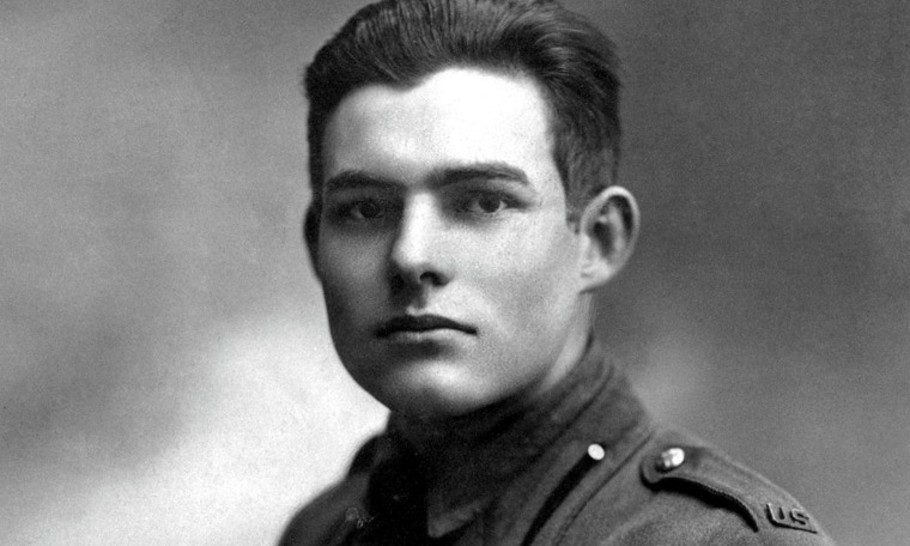
Milan, 1918 Ernest Hemingway, American Red Cross volunteer. Portrait by Ermeni Studios, Milan, Italy. Please credit "Ernest Hemingway Photograph Co...
On July 8, 1918, the 18-year-old Ernest Hemingway was serving as a Red Cross volunteer in Fossalta, on the Italian front 22 miles northeast of Venice. While handing out cigarettes and chocolate to the troops, he was severely wounded in his legs, dangerously close to his groin, by shrapnel from an Austrian trench mortar. The shell was filled with explosives and scrap metal and sliced into his soft flesh. This war wound, the most traumatic event of his life, influenced his writing about sexually damaged heroes and gored bullfighters.
The short-term effects of this near-fatal wound were strangely positive. Despite his injured legs and excruciating pain, Hemingway was able to carry a wounded Italian soldier to safety, and was awarded a prestigious Italian Silver Medal for Valour.* Proud and happy while recovering from his physical wounds, he fell in love with an American nurse in a Milan hospital. He also met and idealised an older English officer, Eric Dorman-Smith, who became a lifelong friend and influenced his ideas and his writing.
Hemingway returned to his hometown, Oak Park, Illinois, wearing a dashing Italian uniform and cape. The local newspaper praised him and he assumed the role of military hero. The wound that nearly castrated him later inspired the character of Jake Barnes, the mutilated hero of The Sun Also Rises (1926). The “Lost Generation” depicted in the novel not only meant the lives that were lost in the war, but also the survivors who had lost their youth and moral values.
The psychological effects on the young Hemingway were more insidious and profound. His close encounter with death and miraculous survival made him confident that he could confront danger and that nothing could kill him. He’d survived a precarious existence at the front, and his courage under fire also made him feel that he was destined for greatness. As a Red Cross civilian and war correspondent in five conflicts — Italy in 1918, Turkey and Greece in 1922, Spain in 1937-38, China in 1941, France and Germany in 1944-45 — he constantly took reckless risks to place himself in the same danger as the actual combatants. He thought he was immortal—and he was—until his last, self-inflicted wound.
Hemingway offered readers sound advice, based on extensive experience, about how to survive in battle. In For Whom the Bell Tolls (1940), his novel about the Spanish Civil War, the hero Robert Jordan believes, “This was the greatest gift that he had, the talent that fitted him for war; that ability not to ignore but to despise whatever bad ending there could be.” Two years later, in the Introduction to his anthology Men at War, Hemingway developed the idea that thinking, anticipating fears and morbid imagining about being captured, wounded or killed could be fatal: “Cowardice, as distinguished from panic, is almost always simply a lack of ability to suspend the functioning of the imagination. Learning to suspend your imagination and live completely in the very second of the present minute with no before and no after is the greatest gift a soldier can acquire.”
Hemingway’s wound inspired his other damaged fictional heroes: Frederic Henry in A Farewell to Arms (1929), and Nick Adams in “In Another Country” (1927) and “A Way You’ll Never Be” (1933). Wounded combatants slowly recover from their traumas in “Soldier’s Home” (1925) and “Big Two-Hearted River” (1925). His war wound recurs most significantly in the violent Interchapters of his first book In Our Time (1925). Five of the fifteen Interchapters describe war, and in section VI the hero is badly wounded and quite helpless: “Nick sat against the wall of the church where they had dragged him to be clear of the machine-gun fire in the street. Both legs stuck out awkwardly. He had been hit in the spine.” His Italian comrade Rinaldi, “big backed, his equipment sprawling, lay face downward against the wall.”
Hemingway’s characteristic concise style was already fully formed in this paragraph. He repeats “against the wall” as well as face, street, sweaty-sweatily, brilliantly, carefully, dead and Senta (Italian for “listen”). Several Austrian soldiers lay dead in the street. Nick tells Rinaldi, “You and me we’ve made a separate peace” and can withdraw from the war as invalids. Nick also alludes to Soviet Russia’s “separate peace” when they withdrew from the Great War in December 1917 and allowed the massive German armies to shift from the Eastern to the Western Front. The battle was not “going well” and Rinaldi, “a disappointing audience”, was breathing heavily and already half-dead.
Like Interchapter II about wounded Greek refugees fleeing from Turkey after their military defeat in September 1922, Hemingway’s story “On the Quai at Smyrna” (1930) shows the disastrous effects of war on the civilian population. When the Greek residents of the city had been driven to the Mediterranean coast at the western edge of Smyrna (now Izmir), they couldn’t take their baggage mules with them and didn’t want to leave them to the Turks. So “they just broke their forelegs and dumped them into the shallow water.” In Satire X, 2000 years earlier, Juvenal had described the same desperate sacrifice to deprive the enemy of their animals: franguntur crura caballis (they broke the horses’ legs).
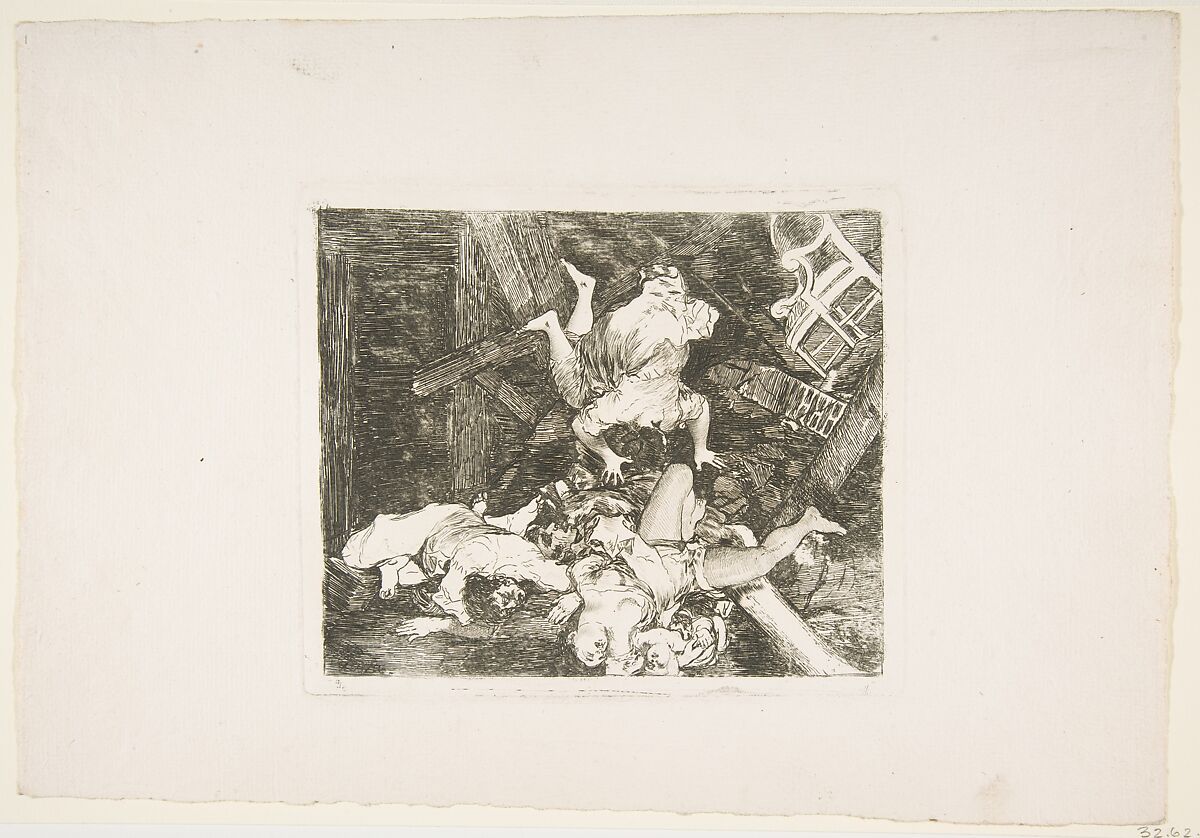
Plate 30 from “The Disasters of War” (Los Desastres de la Guerra): ‘Ravages of War’ (Estragos de la guerra)
Goya (Francisco de Goya y Lucientes) Spanish
1810
Francisco Goya’s Disasters of War describes many atrocities that also appear in Hemingway’s story “A Natural History of the Dead” (1932). Goya’s The Ravages of War (etching 30), depicts the explosion of a powder magazine in his native Zaragoza as the building collapses and the human bodies and household furniture plunge from the roof to the ground with vertiginous violence. Hemingway similarly portrays the effects of the explosion of a munitions factory near Milan in September 1920, and the horrific effect of seeing the dead like corpses on a battlefield in war: women dying, dead horses, mutilated bodies, rotting corpses, pillaging the dead, mass burials and piles of corpses for the cemeteries. He contrasts dead soldiers to civilian women and adds: “one becomes so accustomed to the sight of all the dead being men that the sight of a dead woman is quite shocking. The quality of unreality did much to rob the disaster of a horror which might have been much greater.”
Robert Graves had been mistakenly reported dead on the battlefield in World War I and lived to read his own obituaries; Hemingway also read about his supposed death after his two African plane crashes in 1954. In his Paris Review interview, Graves confirmed Hemingway’s belief about seeing dead women and explained why his own World War I poems lacked the bitterness and pacifist feelings of Wilfred Owen and Siegfried Sassoon: “Both Owen and Sassoon were homosexuals. They just couldn’t stand seeing the fields covered with dead bodies of mangled young men. Now, just imagine what it would be like for you and me if we had seen them covered with the bodies of women.”
Always obsessed with death, Hemingway compared the wounds of the soldiers and the matadors, and the Interchapters on war led inexorably to his vicarious participation in the corrida. In Death in the Afternoon (1932) he wrote, “The only place where you could see life and death, i.e., violent death, now that the wars were over, was in the bullring.” In the dangerous bullfight, the spectacular equivalent of military combat, the matador displays his courage and risks his life in a solemn and tragic ritual. In September 1865 the French painter Edouard Manet wrote from Spain to his poet-friend Charles Baudelaire: “One of the most beautiful, most curious and most terrible spectacles that one can see is the bull hunt, the brilliant, flickering and at the same time dramatic appearance of the corrida I attended.”
When the matador, propelled by the massive energy of the crowd, connects to the bull with the thrust of the sword, they are joined by a third figure: Death. In his story “The Undefeated” (1925), an old matador attempts to make a comeback during a night fight in Madrid. Tossed twice on the horns and gored as he “felt the horn go into him,” he finally kills the bull on the sixth attempt and is rushed to the infirmary. In the ironic conclusion he declares, “I was going good. I didn’t have any luck. That was all.” The bitter title suggests the Conradian theme of victory in defeat.
In Interchapter IX the matadors are clearly defeated. The first one “got the horn through his sword hand.” The second matador slipped and “the bull caught him through the belly.” He lay in the sand, called for his sword and fainted. Since no more than three matadors are allowed in one fight, a young and inexperienced torero had to kill all five bulls. Exhausted in the final combat, he could hardly lift his arm and couldn’t get the sword in, but finally made it. “He sat down in the sand and puked while the crowd hollered and threw things down into the bull ring.” The hostile mob ignored his courage and condemned his failure. Alike Hemingway in war, overconfidence, recklessness and even courage in the corrida do not guarantee survival.
*As a young man, General Sir Richard O’Connor won the same medal in October 1918 for capturing an island on the Piave River.
Jeffrey Meyers has watched more than 50 bullfights in Spain, Portugal, France and Mexico, and interviewed the leading matadors Luis Miguel Dominguín and Antonio Ordóñez.
A Message from TheArticle
We are the only publication that’s committed to covering every angle. We have an important contribution to make, one that’s needed now more than ever, and we need your help to continue publishing throughout these hard economic times. So please, make a donation.


